01
The Guy Who Wanted a Cool German Shepherd
I'm going to start this story with a confession.
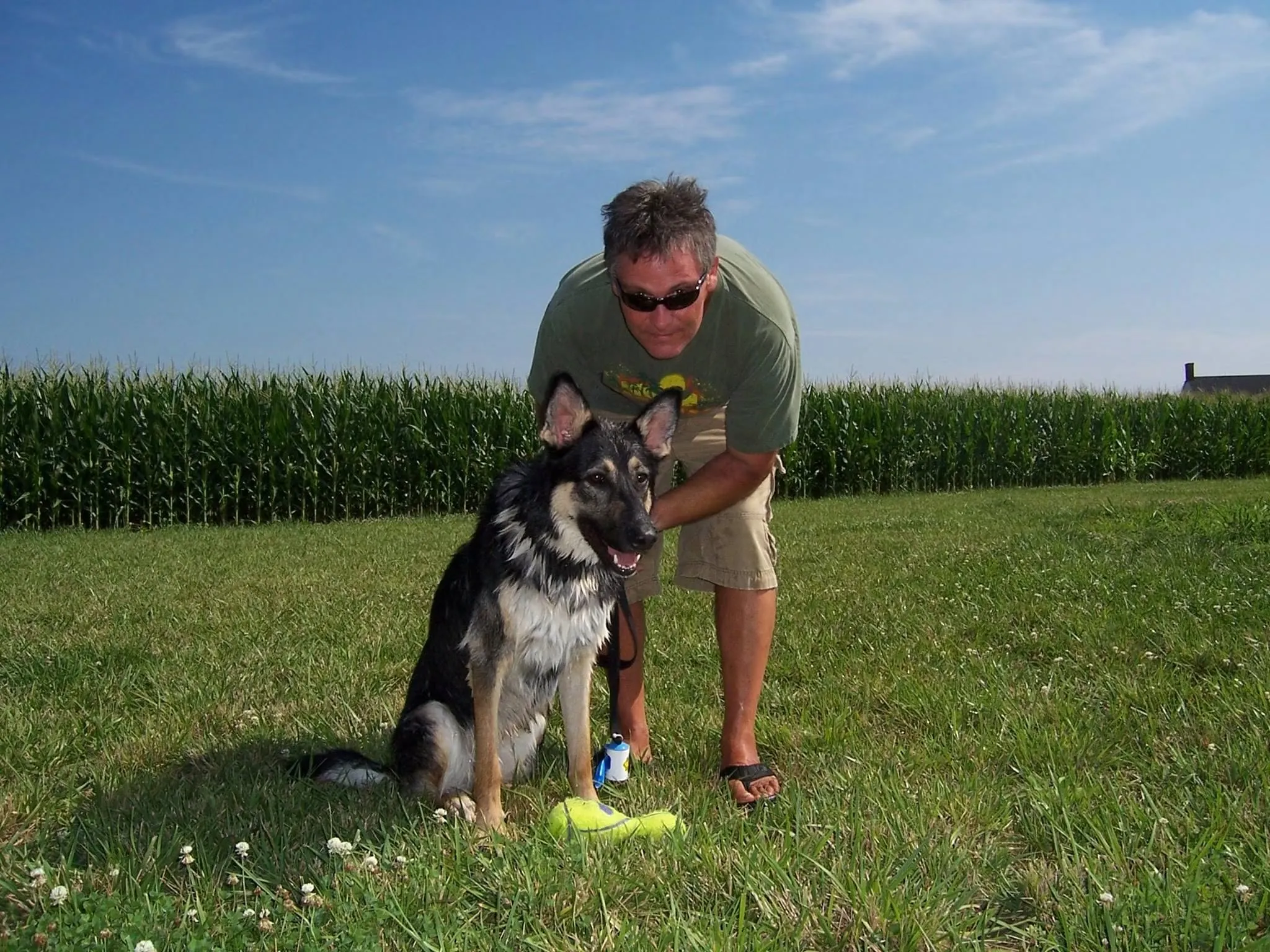
I was the guy who wanted a cool German Shepherd.
That's it.
I loved the breed. The intelligence. The athleticism. The presence. Everything about them.
But I'd never owned a German Shepherd before.
And looking back, I didn't have a fucking clue what I was getting myself into.
I found Roscoe through a guy in Pigtown, Baltimore.
He was about seven months old.
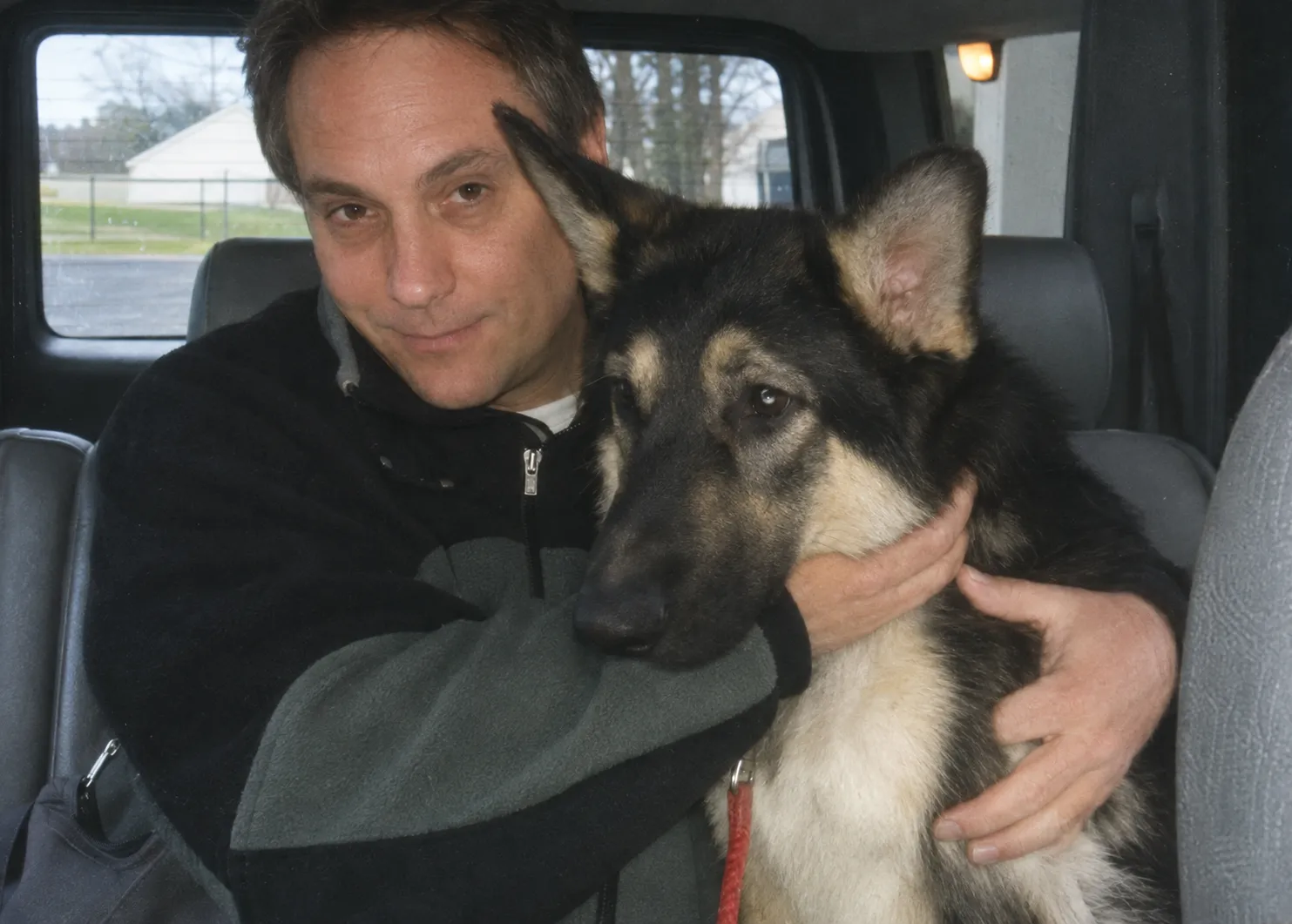
The guy had been working with him on protection training. I want to make something clear: I don't believe the man was cruel to Roscoe or deliberately mistreated him.
But I do believe the training Roscoe received contributed to the fear aggression that came with him.
And that fear aggression was no joke.
Roscoe bit me the day I picked him up.
Hard.
Right in the stomach.
Hard enough to leave bruising through my jacket.
That probably should have been my first indication that this wasn't going to be quite the experience I'd imagined.
But I'd made a commitment.
And I've never been somebody who gives up on a dog.
The problem was that I had absolutely no idea what to do.
Taking Roscoe for a walk was an adventure, and not the good kind.
He'd pull me down the street.
Hackles raised.
Lunging at people.
Teeth bared.
A snarling German Shepherd at the end of a leash.
And there I was, the guy who wanted a cool German Shepherd, trying to figure out how the hell to keep him under control.
I wasn't enjoying it.
Roscoe certainly wasn't enjoying it.
And I knew enough to understand that somebody could get seriously hurt if I didn't figure this out.
So I did what a lot of clueless dog owners probably did back then.
I ordered Cesar Millan's videos.
I figured I'd watch some DVDs, learn a few techniques, and get this whole German Shepherd situation sorted out.
Ha.
I had no idea how much I had to learn.
Fortunately, I eventually found Mary.
And that changed everything.
Back to chapters ↑02
Meet Mary
Mary trained service dogs for a living.
Mary wasn't particularly interested in hearing about everything I thought I knew from watching dog-training videos.
She was interested in the dog standing in front of us.
And she understood something I didn't.
Roscoe wasn't simply a bad dog.
He was a frightened dog.
A powerful, frightened German Shepherd who had learned to react aggressively to things that scared him.
And that combination made him a serious responsibility.
I remember one of our early conversations about training equipment.
Mary introduced me to a prong collar.
I looked at the thing and thought it belonged in a medieval torture chamber.
I told her about Cesar and positive reinforcement.
She laughed.
Then she gave me an answer I've never forgotten.
She told me we could spend a couple of years working through things one way, or we could address the immediate safety problem standing in front of us.
Because, as she explained, I had a major liability at the end of that leash.
A dog who might bite somebody.
That conversation was part of how Mary approached Roscoe's particular situation. It wasn't a lesson that every dog needed the same equipment or methods.
What I really needed was someone who understood the dog I had and could teach me how to work with him responsibly.
I didn't suddenly become an expert on training tools that afternoon.
I became a student.
And Mary became my teacher.
Back to chapters ↑03
An Eight-Month Apprenticeship
When I think about those months with Mary, I don't really think of them as ordinary dog-training lessons.
It was an apprenticeship.
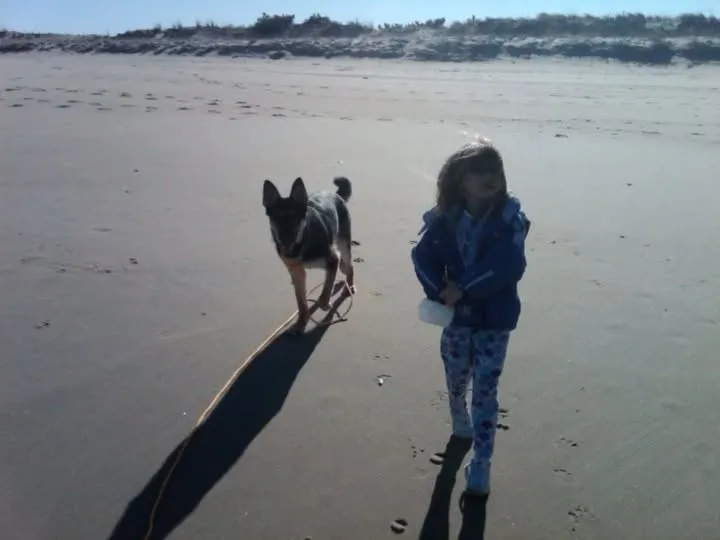
For roughly eight months, we worked together.
Sometimes two or three sessions a week.
And Mary wasn't just teaching Roscoe.
She was teaching me.
Over and over.
My voice.
My timing.
My posture.
My leash handling.
My expectations.
My consistency.
I remember her correcting the tone of my commands.
I'd tell Roscoe to do something, and my voice would rise at the end.
She wanted it steady.
Flat.
Confident.
Again.
Again.
Again.
It sounds like such a small thing.
Believe me, it wasn't.
Mary taught me that emotion travels down the leash.
She taught me that I couldn't expect confidence from a frightened dog if I wasn't communicating clearly myself.
And she taught me something I've carried with me ever since.
Everything is a training opportunity.
Every doorway.
Every walk.
Every meal.
Every interaction.
Nothing was too ordinary to become part of the work.
And then there was the hand-feeding.
Four months.
Two meals every day.
By hand.
Not a handful of treats here and there.
Every breakfast.
Every dinner.
For four months.
We used those meals to practice focus, communication, and Look at Me.
Breakfast wasn't just breakfast.
Dinner wasn't just dinner.
They were opportunities to work together.
Day after day, piece by piece, I was learning to become somebody Roscoe could look to for guidance.
And slowly, that terrified German Shepherd began to change.
He started paying attention to me instead of reacting to everything happening around him.
He began learning that he didn't have to face every uncertainty by lunging and showing his teeth.
And I was learning something just as important.
Patience.
Because you can't rush trust.
You can't demand that a frightened dog suddenly become confident because you've decided he's had enough time.
You have to show up.
You have to be consistent.
And sometimes you have to do the same little thing hundreds of times before you see the result.
People love watching a beautifully trained dog.
They see the perfect heel, the immediate recall, the incredible athletic ability.
What they don't see are the ordinary mornings and evenings that came before it.
They don't see four months of hand-feeding.
They don't see the repetition.
They don't see how much work goes into making something eventually look effortless.
And I wouldn't trade those months for anything.
Because that was where Roscoe and I began becoming a team.
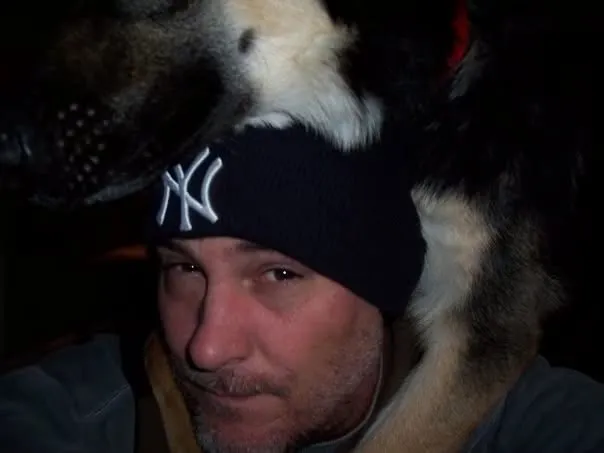
It started with Look at Me.
And everything else grew from there.
Back to chapters ↑04
The Home Depot Test
Mary wasn't interested in Roscoe behaving beautifully only in some quiet, controlled training area.
He needed to learn how to handle the real world.
People.
Noise.
Movement.
Distractions.
Places that had once overwhelmed him.
I remember one training trip to Home Depot.
Mary put a service vest on Roscoe for the exercise.
And we worked on having him stay in one aisle while we moved into another.
Now remember, this was the same dog who had been dragging me down the street with his hackles raised, lunging at strangers.
And there he was.
In Home Depot.
Performing perfectly.
It's hard to explain what a moment like that feels like unless you've lived through the work that came before it.
To somebody walking through the store, he probably just looked like a well-behaved German Shepherd.
They couldn't see the dog he'd been months earlier.
They couldn't see the training sessions.
The frustration.
The corrections Mary had given me.
The hand-feeding.
The countless hours of repetition.
They just saw the result.
But I knew what I was looking at.
I was looking at a dog who was learning to trust the world.
We worked in other real-world settings, including PetSmart.
And the more we practiced, the more confident Roscoe became.
Eventually, the frightened young German Shepherd who had arrived in my life with severe fear aggression was doing therapy dog work in hospitals.
Think about that.
The dog who once lunged at people, baring his teeth because he was afraid, had learned to be comfortable around people.
That transformation still amazes me.
But the real reward wasn't a title or certificate.
It was watching Roscoe discover that the world didn't have to be such a frightening place.
Back to chapters ↑05
A Life in Motion
Now here's where the story gets fun.
Because Roscoe didn't just become an obedient German Shepherd.
He became one hell of an athlete.
And his absolute obsession was the frisbee.
Good God, that dog loved a frisbee.
I used Hyperflite Jawz discs. Not the cheap plastic things you'd find hanging in a pet store.
I used to order them fifty at a time.
Fifty!
And I needed them.
Roscoe would work the edges of those discs until they were so chewed up that I had to retire them.
Once the edges became rough enough to risk cutting his mouth, into the trash they went.
You would have thought I was throwing away his most treasured possession.
He'd pace around, looking at the trash, absolutely devastated that one of his beloved frisbees had been sentenced to death.
And here's the ridiculous part.
He had a basket where he kept his discs.
I'd have them organized so he could choose which one he wanted.
You'd think he'd pick a beautiful new frisbee.
Nope.
Every damn time, he'd go for the most gnawed-up, beat-to-hell disc in the basket.
That was his weapon of choice.
We had a routine.
Early mornings were for obedience drills. We'd start around six and work until seven or so, with breaks and fun mixed in.
Then, once or sometimes twice a day, we'd play frisbee.
Twenty or thirty minutes.
Every day.
For years.
It became part of how we lived.
And I'm not talking about standing in the yard tossing a disc while Roscoe fetched it.
We had routines.
Figure eights through my legs.
Left heel. Right heel.
Hand left. Hand right.
Rollouts.
Jumping over my leg.
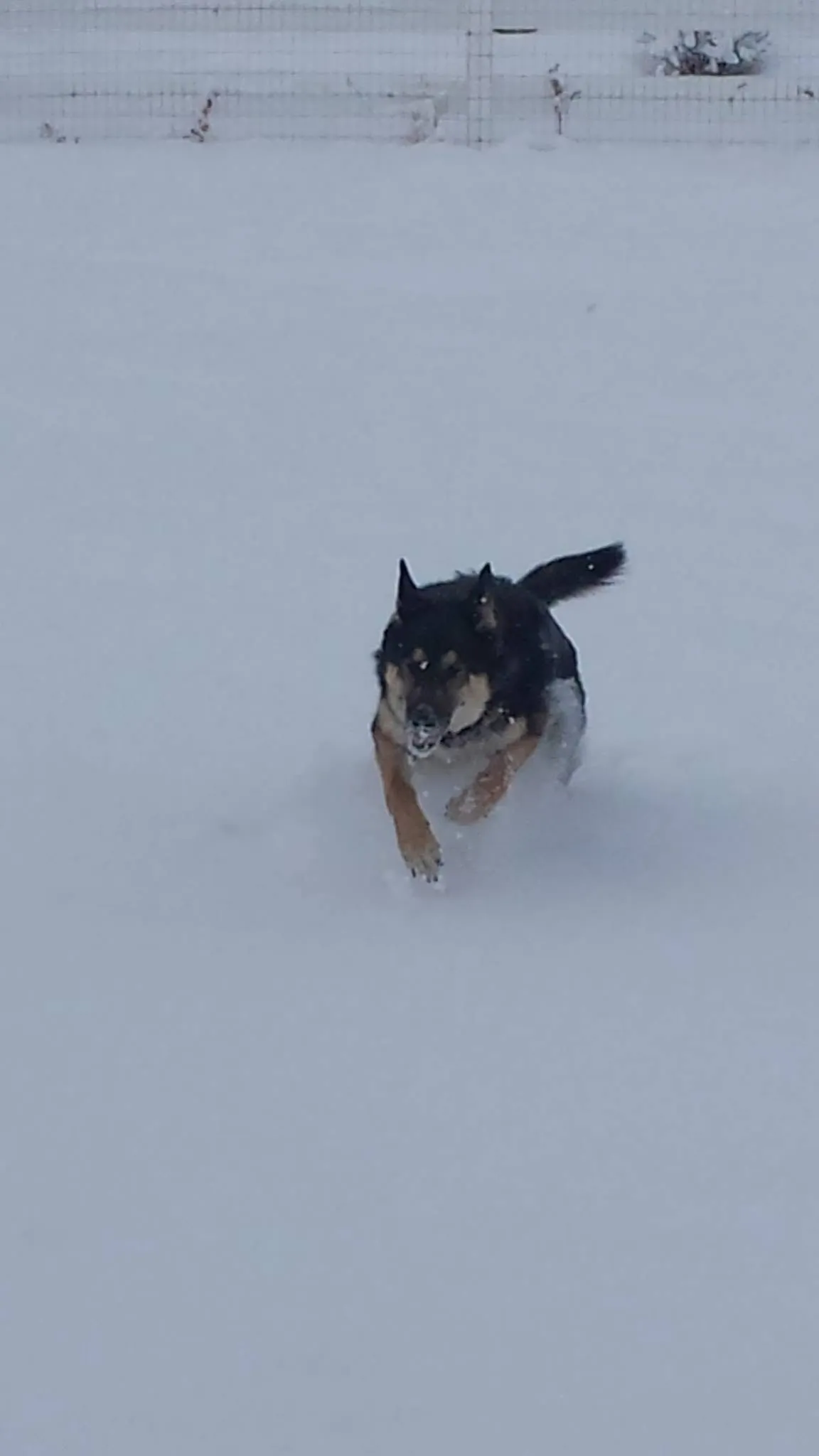
Long throws where he would race across the field, track the frisbee like a center fielder, and launch himself into the air.
He could also launch off my back for a short catch.
Imagine a hundred-pound German Shepherd using your back as a springboard.
I was in my early forties then.
I'm not sure I'd volunteer for that particular trick today.
But Roscoe was incredible.
For a hundred-pound dog, he was fast, agile, and unbelievably focused.
He rarely missed a catch unless I made a bad throw.
And when that frisbee was in the air?
The world could have been ending around him.
He wouldn't have given a damn.
All that mattered was catching his disc.
But Mary had taught me another lesson that made our frisbee sessions even more remarkable.
Impulse control.
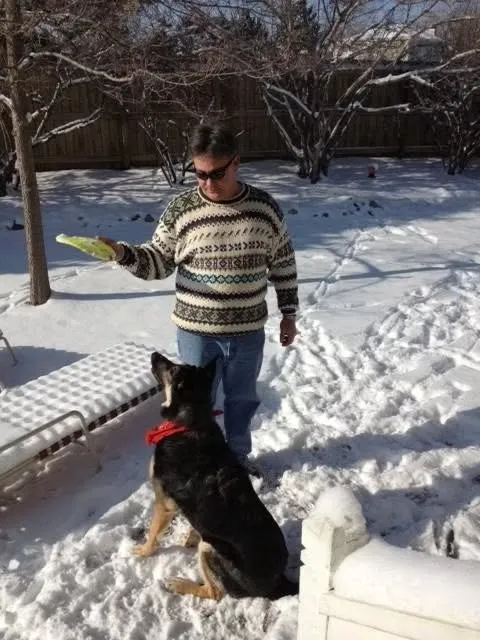
I'd throw that frisbee and make Roscoe wait.
Imagine that.
A dog whose entire universe revolved around chasing a flying disc, sitting perfectly still while I threw one.
The anticipation was almost unbearable for him.
He'd stare at it.
He'd drool.
He looked like a race car sitting on the starting line, engine screaming, waiting for the green light.
Then I'd say:
“Roscoe, go get it!”
BOOM.
Explosion.
A hundred pounds of German Shepherd launching across the grass.
It was one of the most beautiful things I've ever watched.
Not just because he could run or jump.
Because he could control himself until I released him.
That's what all those years of work gave us.
Freedom.
Back to chapters ↑06
The Day My Uncle Met the Real Roscoe
One of my favorite memories happened when I took Roscoe to visit my uncle Frank in rural Pennsylvania.
My uncle was like a second father to me.
He was a huge man, but one of the kindest, gentlest people I've ever known.
Near the end of his street was an old coal dump that had been reclaimed. They'd planted grass, and there was a baseball field where we could play.
I told my uncle to come watch Roscoe.
He was concerned.
He asked if I was really going to take that big German Shepherd out there without a leash.
What if he ran away?
I told him not to worry.
Then Roscoe and I started our routine.
The heeling.
The figure eights.
The jumps.
The frisbee catches.
Those long, high throws where Roscoe would watch the disc, judge its flight, and explode into the air at exactly the right moment.
My uncle couldn't believe what he was watching.
And I loved every second of it.
Not because I wanted to show off some intimidating police-looking dog.
But because I knew what it had taken for Roscoe and me to reach that point.
And because I got to share that moment with a man I loved.
Back to chapters ↑07
More Than Obedience
People sometimes misunderstand what it means to have a highly trained dog.
They picture discipline, commands, and a dog that never gets to have any fun.
If only they could have met Roscoe.
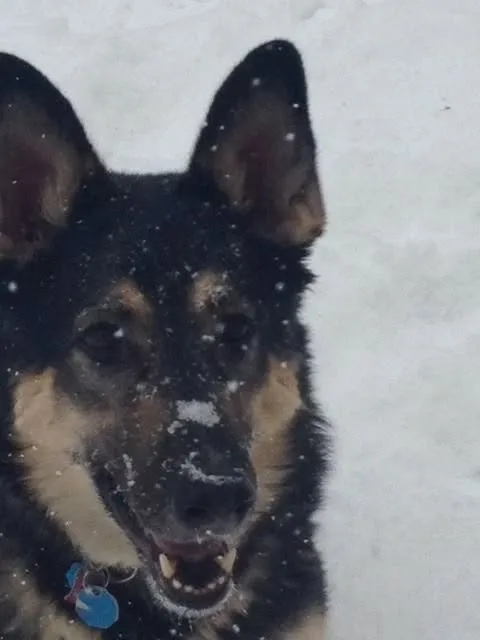
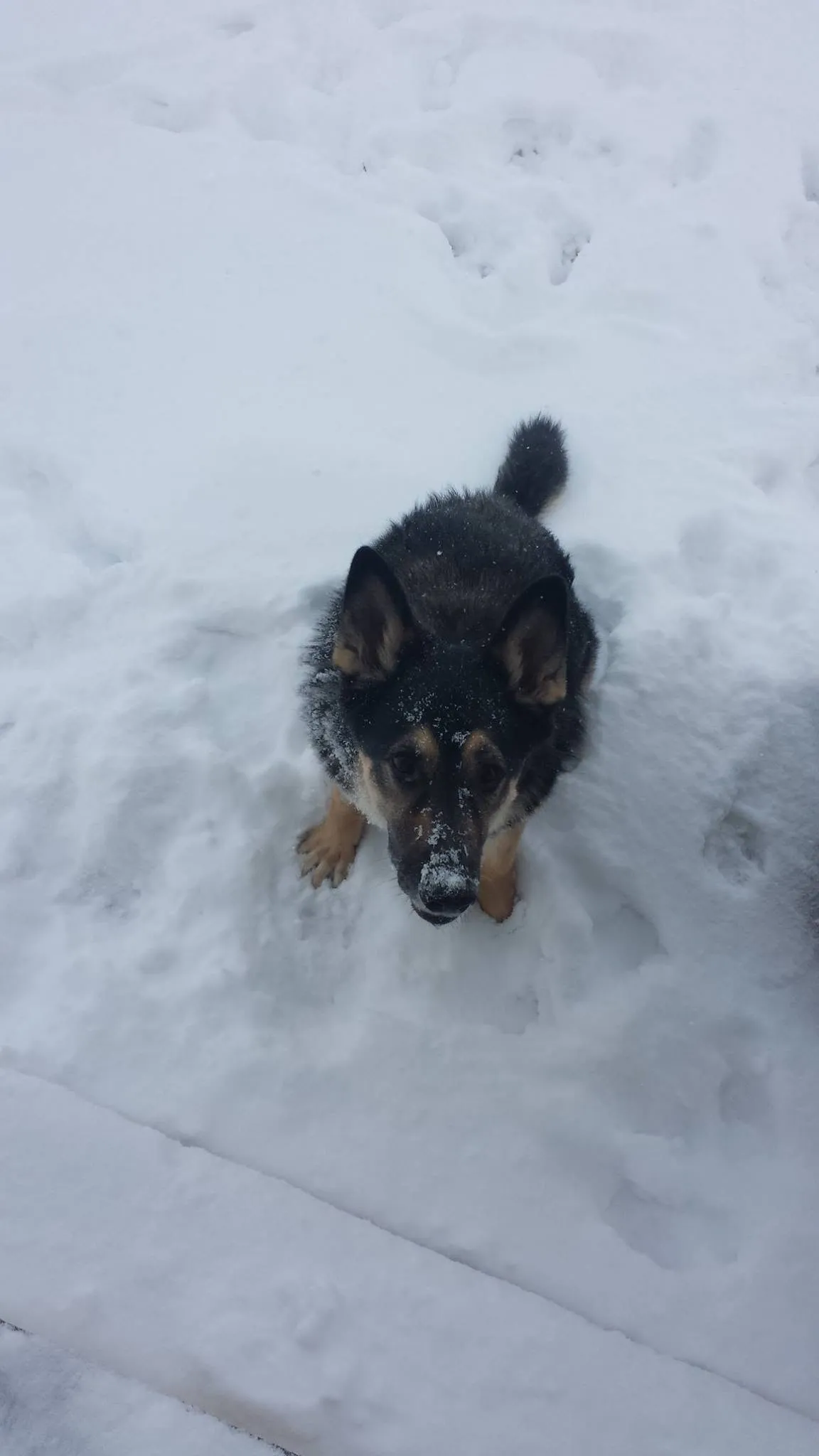
That dog had a wonderful life.
We played constantly.
We went places together.
He had adventures, routines, responsibilities, and more fun than I can possibly describe.
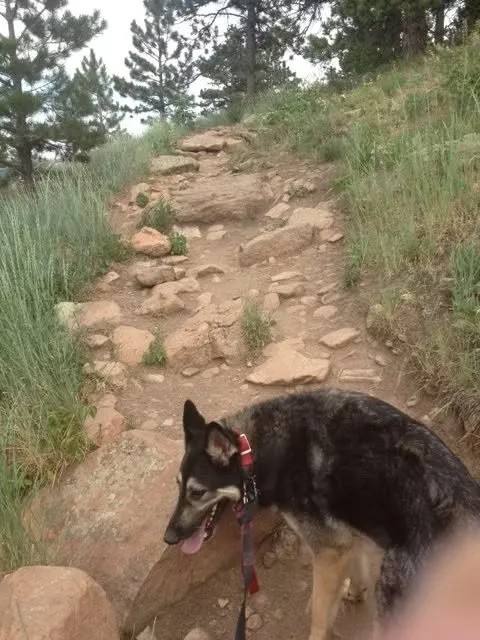
He spent my working days with me, too.
I worked from home, and Roscoe had his own bed in my office.
Naturally, he preferred lying right beside my rolling office chair.
Which was wonderful until I needed to move the damn thing.
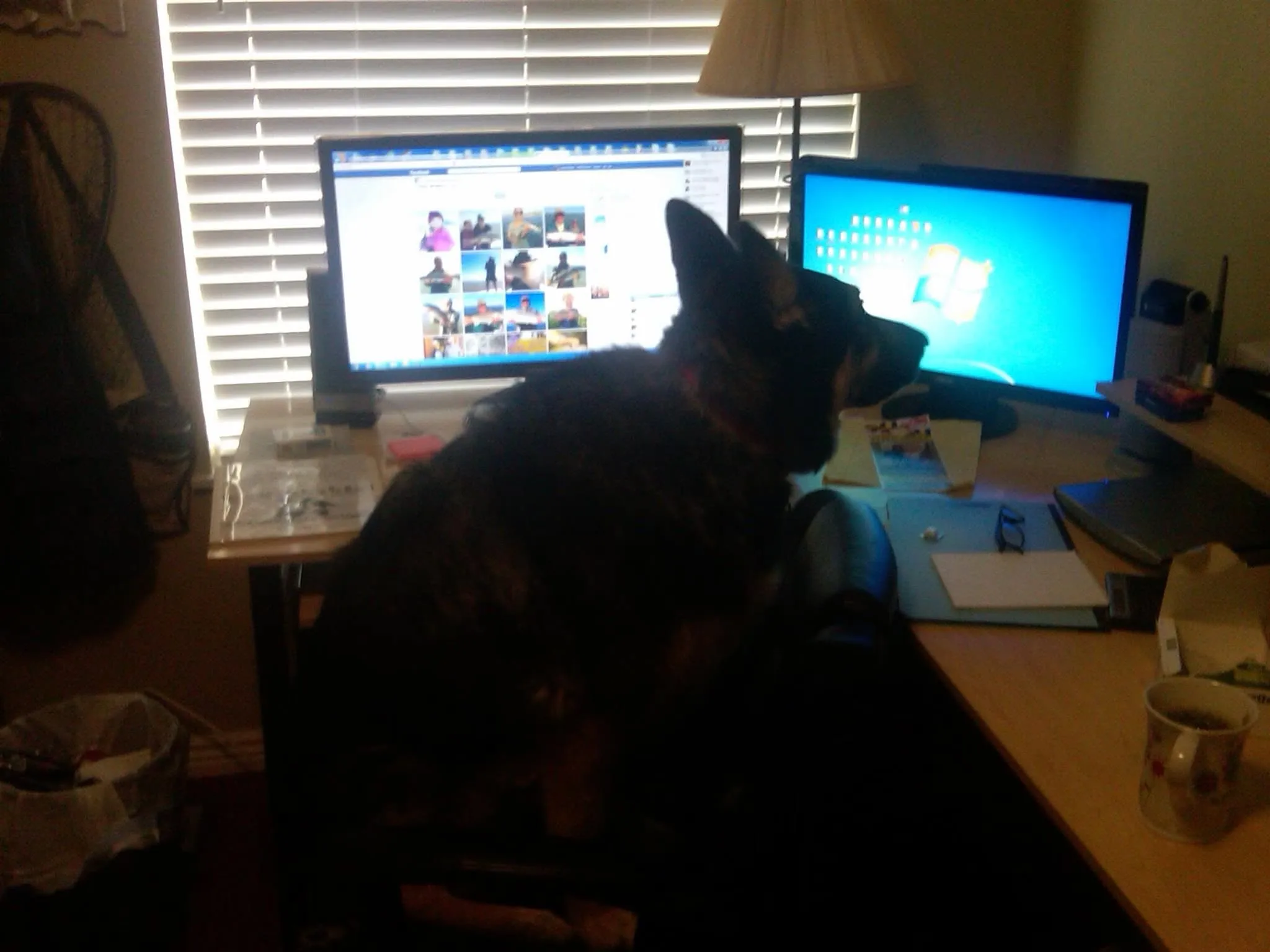
He wanted to be near me.
And I wanted him there.
But our bond didn't mean he couldn't function without me.
Sometimes I went fishing without him, and he'd stay home with my girlfriend at the time.
He missed me, she said.
But he ate, walked with her, behaved normally, and went about his day.
Then I'd come home.
You would have thought Jesus himself had walked through the front door.
He'd greet me like we'd been separated for ten years.
And within five minutes?
There would be a frisbee at my feet.
Welcome home, John.
Now get your ass outside.
I also taught him to carry his own frisbee.
I'd tell him that if he wanted to take his disc to the park, he could carry it himself.
And when we eventually had a place with about three-quarters of an acre, he learned to choose a disc from his basket, carry it outside, bring it back in after playing, and put it away.
Those little things might not sound impressive to somebody else.
But they were part of our relationship.
We understood each other.
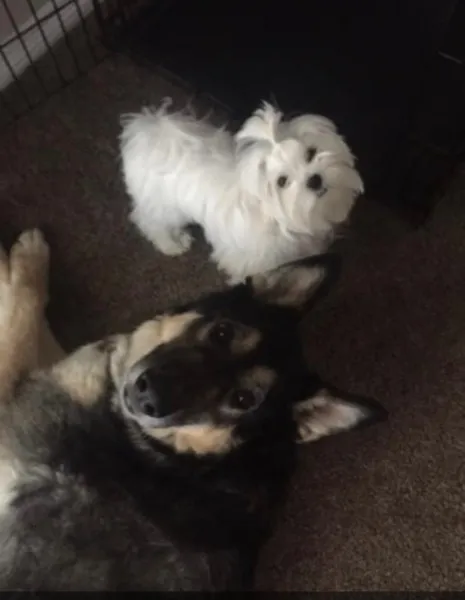
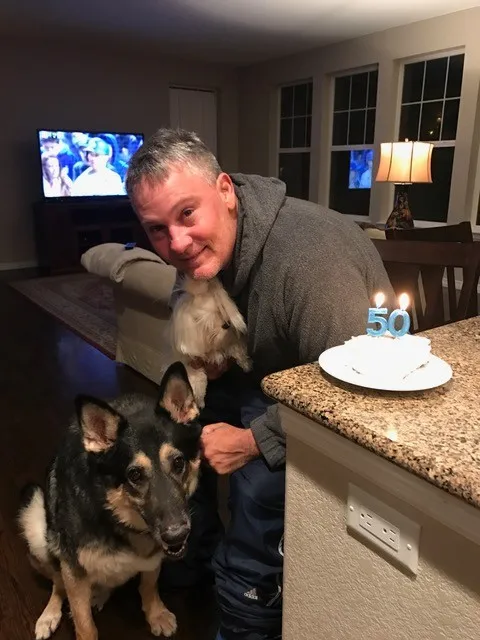
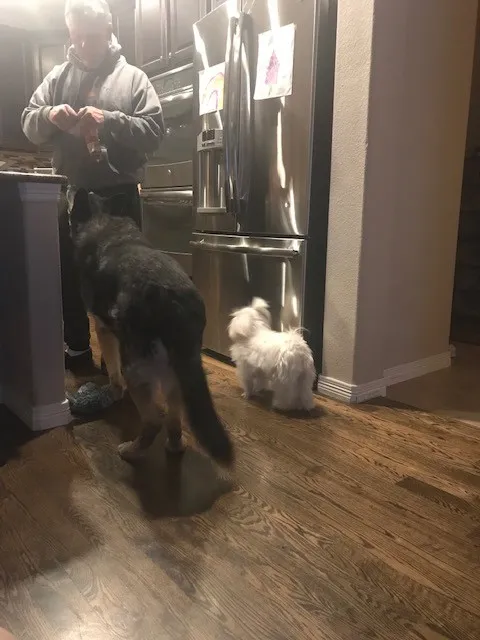
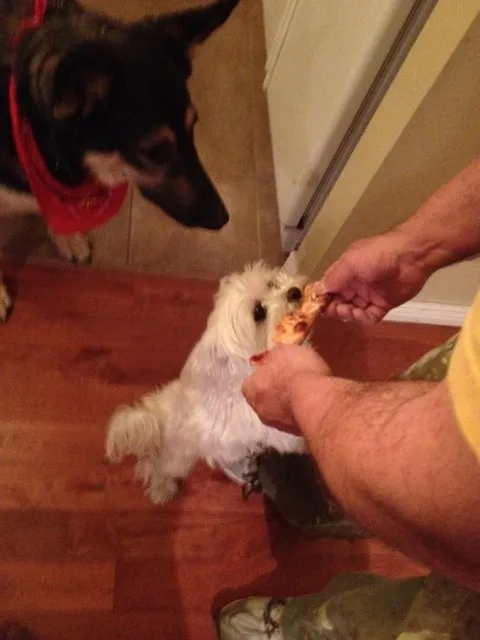
And after years together, that understanding became almost effortless.
Training wasn't something Roscoe and I did.
It became how we lived.
08
What Mary Gave Us
I've had people tell me I'm crazy for getting a Belgian Malinois.
They warn me that these are serious working dogs.
That I need to hire a trainer.
That I don't understand what I'm getting into.
I usually just smile.
Because most of these people never met Roscoe.
They know me as the guy who tells stories about his old German Shepherd.
They don't know what our life together actually looked like.
And I'm not interested in arguing with them.
I'm also not claiming to be some professional dog trainer.
I trained one German Shepherd who became an extraordinary dog.
That's my experience.
I'm proud of it.
But I also know that every dog is different.
And I have plenty left to learn.
That's why I was so happy to reconnect with Mary after all these years.
We talked for almost two hours.
At first, she didn't remember me.
Then, as I started telling her about Roscoe and everything we continued doing after our training together, the memories came back.
I told her about his obedience, his therapy work, the frisbee routines, and the life he lived.
She got emotional.
She told me that hearing what Roscoe became made her training career feel worthwhile.
I don't think she realized what that meant to me.
Because she had believed in us.
And all those years later, I got to tell her that her work mattered.
That everything she taught me stayed with me.
And that Roscoe had gone on to live one hell of a life.
Back to chapters ↑09
Thirteen Years Wasn't Enough
Roscoe lived to be thirteen years old.
Thirteen years.
And for nearly all of them, he was doing great.
He had a wonderful life.
The adventures, the frisbees, the obedience, the time we spent together.
He wasn't a dog who spent his life afraid of everything.
That was how his story began.
It wasn't how he lived it.
And I'm grateful for that beyond words.
It wasn't until his final six months that things really changed.
He started getting sick.
And watching a dog who had once been so powerful, athletic, and full of life begin to decline is something I wouldn't wish on anybody.
This was the same German Shepherd who used to launch himself through the air after frisbees.
The same dog who could run like hell, stop on a command, and look at me as if there was nothing else in the world that mattered.
My boy.
My Big Stah.
And now he was getting old and sick.
Eventually, a veterinarian friend of mine told me something I didn't want to hear.
It was time.
God, those are hard words.
You spend years teaching a dog to trust you.
You promise him, in a thousand little ways, that you'll look after him.
And then one day, looking after him means facing something you desperately don't want to face.
I wanted more time.
Of course I did.
Another morning.
Another walk.
Another afternoon together.
Hell, I would have given anything for one more frisbee at my feet.
But Roscoe had given me thirteen years.
And he'd given me a lifetime's worth of memories.
I couldn't ask him to keep going just because I wasn't ready to say goodbye.
Back to chapters ↑10
The Last Look at Me
I don't think anything can prepare you for saying goodbye to a dog who's been such a huge part of your life.
Roscoe was thirteen when I said goodbye.
His head was in my lap.
And after all those years, all those commands, all those mornings and afternoons together, there was one last moment between us.
Look at me.
The same connection we'd built through four months of hand-feeding and years of working together.
One last time.
He looked at me.
And I looked at him.
My boy.
The frightened German Shepherd from Pigtown who became the dog of a lifetime.
I was there with him.
Right to the end.
And I hope, in whatever way dogs understand these things, he knew just how much I loved him.
Back to chapters ↑11
A Little Dog Named Frank
For years, even while Roscoe was alive, I used to joke with him about the dog who would eventually follow him.
I'd tell him:
“Bud, your replacement is going to be a Malinois named Frank.”
I knew the name long before I knew the dog.
Frank was my uncle's name.
The same uncle who stood in that Pennsylvania field watching Roscoe in amazement.
My uncle Frank was one of the finest human beings I've ever known.
Gentle. Kind. Strong.
He didn't need to intimidate anyone to command respect.
And when I decided to get another working dog, that's the character I wanted to honor.
Not aggression.
Not intimidation.
Strength, confidence, kindness, and self-control.
So when people ask why I named a Belgian Malinois Lil Frank instead of Thor, Odin, or some other fierce-sounding name, I just laugh.
They don't need to understand.
I know what the name means.
And now, after all these years, I have another little dog looking up at me.
Another beginning.
Another chance to build something special.
Frank isn't Roscoe.
I don't expect him to be.
He has his own personality, his own abilities, and his own journey ahead of him.
Some days, I catch myself wanting to move too quickly.
I remember what Roscoe could do when he was fully trained, and I get excited.
Then I have to remind myself:
John, he's a baby.
Give him time.
And then something happens.
We're hand-feeding.
Working on Look at Me.
And this little Belgian Malinois looks straight into my eyes with such beautiful focus that I feel something in my chest I haven't felt quite that way in years.
The bond is beginning.
And I know where it can lead.
Because Roscoe showed me.
Back to chapters ↑12
Until We Meet Again
I believe we'll see the ones we love again.
People can believe whatever they want about that.
I'm a Catholic, even if I've never been particularly good at following all the rules.
And I believe in the Rainbow Bridge.
I have this picture in my head of my uncle Frank reaching heaven and trying to convince Roscoe to come along with him.
And Roscoe saying:
“No, Frank. I'm going to hang around here and wait for Johnny.”
It makes me smile to imagine them together someday.
My uncle Frank.
My Roscoe.
And all of us reunited.
Until then, I have memories that will never leave me.
The early mornings.
The fields.
The frisbees.
The way Roscoe would wait for my command, barely able to contain himself.
The way he'd follow me around the house.
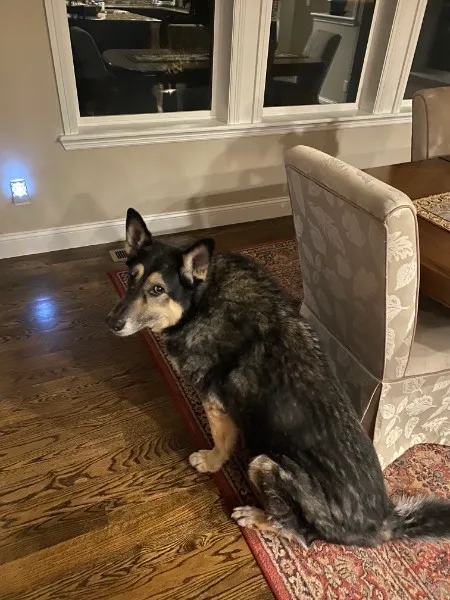
The way he'd greet me when I came home.
And all those moments when he'd look into my eyes, waiting for whatever we were going to do next.
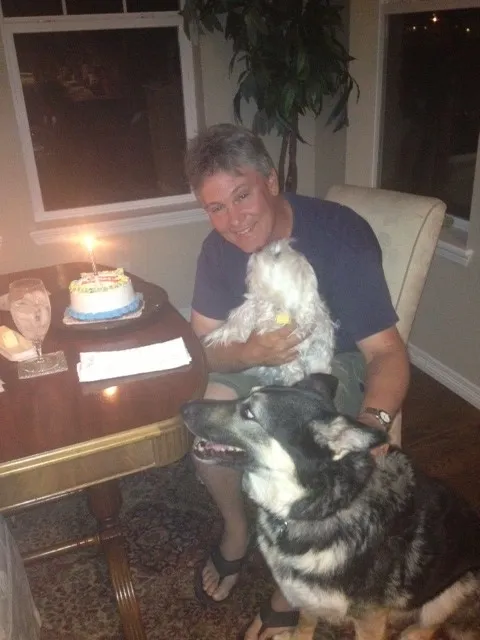
I wish I'd taken more pictures.
Back then, I wasn't thinking about documenting our life.
I was too busy living it.
I don't have photographs of every training session, every perfect heel, or every one of those beautiful Look at Me moments.
But I remember them.
God, do I remember them.
Roscoe started as a frightened young German Shepherd who didn't know how to trust the world.
He became my partner, my constant companion, my frisbee-obsessed athlete, and one of the greatest joys of my life.
And somewhere along the way, he changed me.
He taught me patience.
He taught me consistency.
He taught me that trust is something you earn.
He taught me that real freedom comes from understanding each other.
And he taught me that the time you invest in a dog comes back to you in ways you can't possibly imagine.
Today, when Lil Frank looks into my eyes, waiting for me to tell him what comes next, I see the beginning of another journey.
Frank will never replace Roscoe.
He isn't supposed to.
But he'll benefit from everything Roscoe taught me.
And that's one of the greatest gifts my old friend could have left behind.
He wasn't just the dog I trained.
He was the dog who trained me.
Until we meet again, Big Stah.
I love you, bud.
Back to chapters ↑